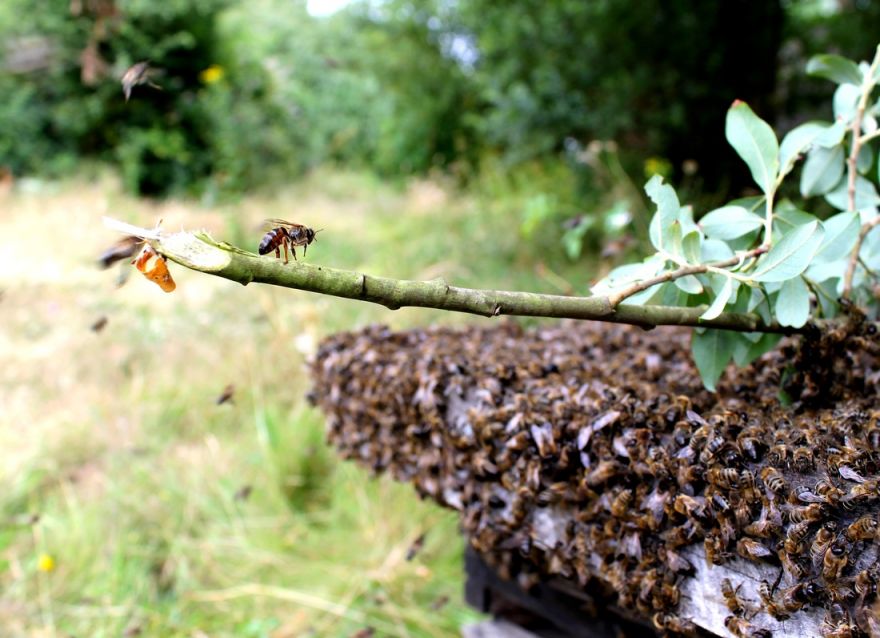
WHY OUR FAR NORTH APIARIES ARE BENEFICIAL FOR QUEEN BREEDING?

The Hua Parakore genetic heritage of our Far North bees has all the qualities required to work optimally in New Zealand; these are the Hua Parakore bees. Our organic bees are like our community: peaceful and welcoming. Over generations and through biodynamic selection, our beloved collaborators have evolved to adapt to their environment.
CLIMATE :
The Far North lives up to its name, and the bee colonies thrive on all year long windy and subtropical conditions. Each Manukā flowering must be optimised by the colony for all year long brooding and raise their queen as best as possible during the dry season.
The queen bees of Far North have adapted to these coastal conditions and, their morphological and biometric characteristics are local. Their adaptation over centuries from european bees (mainly italian bee) has enabled them to raise queen bees with a local ecotype that is well suited to their environment:
- Ability to optimise short, intense periods of Manukā honey flow;
- Quality of hive cleaning and honey production for all year long brooding;
- Absence of disease and selection of varroa-resistant colonies ensuring healthy queens;
- Collaboration and monitoring of queen bee lines with beekeepers in the Far North;
- Swarm settlement for over 50 years in the Far North and queen monitoring for private beekeepers.
APIARIES :
The warm, humid climate of the Far North is conducive to beekeeping, particularly for the production of mānuka honey, which comes from Leptospermum scoparium, a native shrub.
Our apiaries are the result of 180 years of natural selection, successive introductions, crossbreeding, and adaptation to a unique environment.
Our hives in Northland still house ancient strains, considered to be local populations well adapted to the conditions of the region. (native flora, subtropical climate, etc.).
BEHAVIOUR :
The honeybee populations (Apis mellifera) in Far North, although artificially introduced, now exhibit interesting genetic diversity, resulting from crossbreeding between different European breeds adapted to local conditions.
- Apis mellifera mellifera (European black bee): Initially dominant, now in decline or crossed with other strains.
- Apis mellifera ligustica (Italian honeybee): Currently dominant in commercial breeding. It is the main strain used by New Zealand beekeepers.
- Apis mellifera carnica (Carniolan honeybee): Less common than ligustica, but present in our apiaries due to the Honeymoon valley, Peria local carnolian specialised breeding programmes and crossbreeds for the last few decades.